
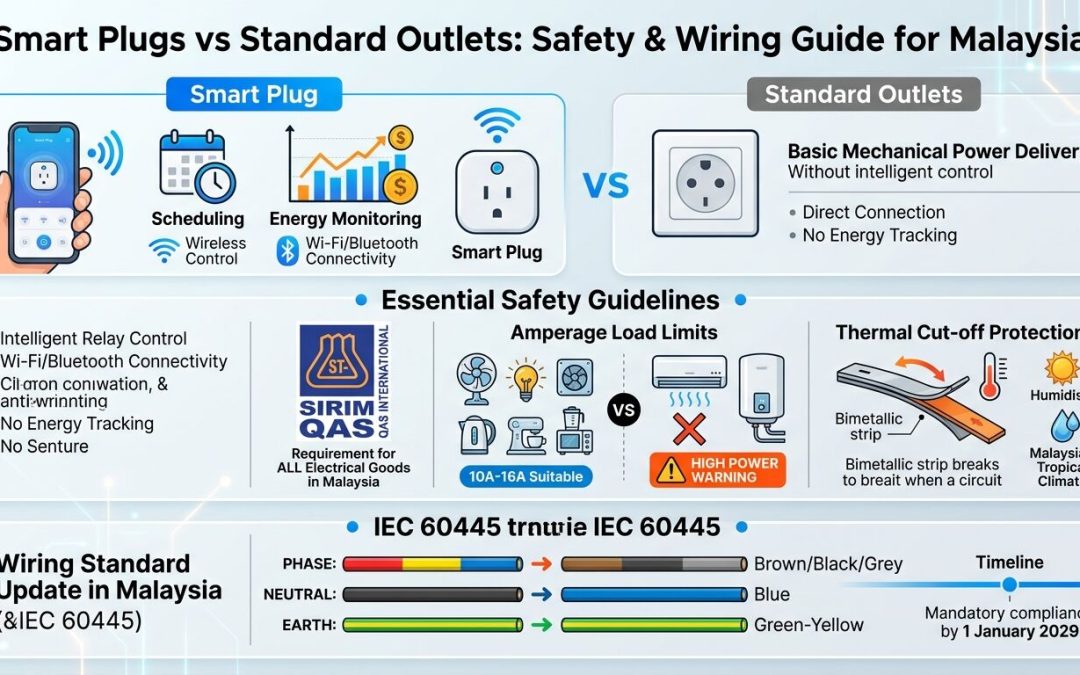
Smart plugs have become increasingly popular in Malaysian homes, offering convenient remote control and energy monitoring capabilities. However, understanding how they differ from standard outlets in terms of safety, wiring requirements, and regulatory compliance is essential for responsible use.
Many homeowners purchase smart plugs without considering critical factors such as electrical load limits, certification requirements, and the unique challenges posed by Malaysia’s tropical climate. Uncertified devices and improper usage can lead to overheating, electrical fires, and property damage.
This is why understanding the distinction between smart plugs and standard outlets plays an important role in protecting Malaysian properties and ensuring electrical safety.
A proper comparison helps identify potential hazards before they become dangerous, allowing homeowners to take preventive action through appropriate device selection and professional installation when necessary.
What Is a Smart Plug and How Does It Differ from a Standard Outlet?
A smart plug is an electrical device that plugs into a standard wall outlet and provides enhanced functionality through wireless connectivity, scheduling capabilities, and often energy monitoring. A standard outlet, by contrast, provides basic power delivery without any intelligent control features.
During a proper comparison, trained electrical specialists examine various factors, including:
- Control method and automation capabilities
- Energy monitoring and data tracking features
- Scheduling and timer functionality
- Wireless connectivity requirements
- Internal component differences
- Amperage and load limitations
- Standby power consumption
The goal is to determine which device is appropriate for specific appliances and usage scenarios.
Why Understanding the Differences Matters in Malaysia
Not every appliance is suitable for smart plug control, and not every smart plug meets Malaysian safety standards.
Some uncertified devices remain hidden dangers until professional inspection or failure occurs.
Understanding these differences helps property owners:
- Select appropriately rated devices for specific appliances
- Avoid overloading circuits with high-power equipment
- Ensure compliance with Malaysian electrical regulations
- Prevent electrical fires caused by inadequate components
- Plan safe smart home implementations
- Protect expensive appliances from power-related damage
Early awareness often prevents costly emergency situations.
Identifying Hidden Electrical Hazards
Professional electricians can identify problems that are difficult to detect without proper training or equipment.
Common hidden hazards with smart plugs include:
- Inadequate amperage ratings for connected appliances
- Lack of thermal protection in budget devices
- Poor physical fit causing loose connections and arcing
- No surge protection against Malaysia’s frequent thunderstorms
- Uncertified components lacking ST-SIRIM safety labels
- Inverter appliance incompatibility causing compressor damage
- Humidity-related failures in tropical climates
These issues may significantly compromise safety even if the device appears functional.
Protecting People and Property
Smart plugs controlling high-power appliances near homes, offices, or public spaces require careful consideration.
Without proper safety measures, unsuitable smart plug usage may cause:
- Electrical fires from overheating
- Damage to appliances through voltage fluctuations
- Circuit overloads affecting entire households
- Electrical shocks from faulty insulation
- Premature device failure
- Voided insurance claims from non-compliant installations
Professional assessments help reduce these risks by recommending appropriate devices and installation methods before accidents occur.
Supporting Safe Smart Home Implementation
Understanding smart plug limitations is not only about avoiding dangers.
It also helps improve overall electrical safety and efficiency.
Specialists may recommend:
- Proper load calculations before installation
- Certified devices with appropriate ratings
- Professional installation for high-power applications
- Regular inspection of smart plug connections
- Replacement schedules for aging devices
Safe electrical practices result in more reliable and efficient smart home systems.
The Importance of Regular Electrical Maintenance
Routine maintenance works together with proper device selection to improve long-term safety.
Services may include:
- Outlet and wiring inspections
- Smart plug functionality testing
- Load capacity assessments
- Thermal imaging for hidden hotspots
- Circuit breaker verification
Regular maintenance reduces unnecessary stress on electrical systems and helps extend equipment lifespan.
Why Storm Damage Increases Electrical Risks
Heavy rain, strong winds, and thunderstorms can damage electrical systems even when damage is not immediately visible.
Storms may cause:
- Power surges damaging smart plug electronics
- Water ingress into outdoor outlets
- Voltage fluctuations affecting connected devices
- Hidden damage to wiring insulation
- Tripped circuits from ground faults
Professional inspection after severe weather helps identify hidden damage before another storm causes complete failure.
Commercial Properties Benefit from Electrical Assessments
Businesses often have smart plugs and standard outlets located in:
- Office buildings
- Retail spaces
- Factories
- Hotels
- Restaurants
- Educational institutions
Regular assessments help property managers reduce liability risks while maintaining a safe environment for employees and visitors.
Preventive inspections also minimize unexpected disruptions caused by electrical failures.
When Should Electrical Assessments Be Performed?
Property owners should consider scheduling an assessment when:
- Adding high-power appliances
- Installing smart plugs for new devices
- Experiencing frequent circuit breaker trips
- Noticing discoloured or warm outlets
- After severe storms or flooding
- Renovating or expanding electrical systems
- Purchasing older properties with unknown wiring history
Regular inspections are especially important for properties with mature electrical systems.
Why Professional Assessments Are Better Than DIY Inspections
While homeowners can identify obvious problems, many electrical hazards require professional knowledge and experience.
Electrical specialists understand:
- Load calculation methodologies
- Malaysian wiring standards and regulations
- Device certification requirements
- Thermal management principles
- Safe installation practices
They also use specialized tools and follow industry best practices to provide accurate recommendations.
Professional assessments reduce guesswork and help property owners make informed decisions.
Long-Term Benefits of Proper Electrical Management
Investing in regular electrical assessments provides numerous long-term advantages.
Benefits include:
- Improved property safety
- Early hazard detection
- Lower insurance risks
- Reduced emergency repair costs
- Extended appliance lifespan
- Better energy efficiency
- Greater peace of mind
- Compliance with Malaysian regulations
Preventive care is often more cost-effective than responding to emergency situations after damage has occurred.
Choosing Certified Smart Plugs and Electrical Services
When selecting smart plugs and electrical services, consider providers that offer:
- ST-SIRIM certified devices
- Appropriate amperage ratings for your appliances
- Thermal cut-off protection mechanisms
- Local execution scheduling capability
- Experienced licensed electricians
- Comprehensive electrical inspections
- Safety-focused work practices
Working with certified products and experienced professionals helps ensure electrical systems are managed safely and responsibly.
Malaysia’s Electrical Wiring Colour Code Changes
Malaysia is adopting the internationally harmonised IEC 60445 standard, replacing the traditional colour coding system based largely on the former British standard.
Under the old colour code, phase conductors were red, yellow, and blue, neutral was black, and earth was green or green-yellow.
Under the new standard, phase conductors are brown, black, and grey, neutral is blue, and earth remains green-yellow.
The transition period allows either old or new colour codes for new wiring until 1 January 2029, after which all electrical wiring must comply with the new standard. This change is critical for anyone installing or modifying electrical systems, including smart plug infrastructure.
Conclusion
Smart plugs and standard outlets serve different purposes in Malaysian homes. While smart plugs offer convenience and energy monitoring capabilities, they come with specific safety considerations that must be understood and respected.
Whether for residential homes, commercial buildings, or industrial facilities, proper device selection and regular assessments provide valuable information that supports safer electrical systems.
Combined with professional installation and maintenance services when necessary, understanding the differences between smart plugs and standard outlets helps protect both people and property while enabling the benefits of smart home technology.
FAQs
1. What is the main difference between a smart plug and a standard outlet?
A smart plug is an intelligent device that plugs into a standard outlet and adds wireless control, scheduling, and often energy monitoring capabilities. A standard outlet provides basic power delivery without any intelligent features. Smart plugs contain microcontrollers and relays, while standard outlets are purely mechanical.
2. Can smart plugs handle high-power appliances in Malaysia?
Be very careful. Most standard smart plugs are rated for 10A to 16A. While this covers fans, lights, and small appliances, high-power devices like air conditioners and water heaters may exceed these limits. Always check the amperage rating and compare it with your appliance’s requirements. For high-power applications, consider a dedicated smart switch installed by a professional.
3. What certifications should Malaysian smart plugs have?
Smart plugs sold in Malaysia should carry the ST-SIRIM safety label, which proves the device has been inspected and tested according to established standards. The Energy Commission (Suruhanjaya Tenaga) advises consumers to only purchase electrical equipment with this certification. Uncertified devices may pose fire and electrical shock hazards.
4. Why do smart plugs need thermal protection in Malaysia?
Malaysia’s hot and humid climate places additional stress on electronic components. Advanced thermal cut-off mechanisms, often using bimetallic strips that physically break the circuit when overheated, provide critical fire prevention. This physical fail-safe is especially important for high-load appliances and in environments where air conditioning may not be continuously available.
5. How does the new Malaysian cable colour code affect smart plug installation?
If you are installing new wiring or modifying existing circuits for smart plug infrastructure, you should be aware that Malaysia is transitioning to the IEC 60445 standard. Phase conductors are changing from red, yellow, and blue to brown, black, and grey, while neutral changes from black to blue. The earth conductor remains green-yellow. This change affects anyone working with electrical installations.