
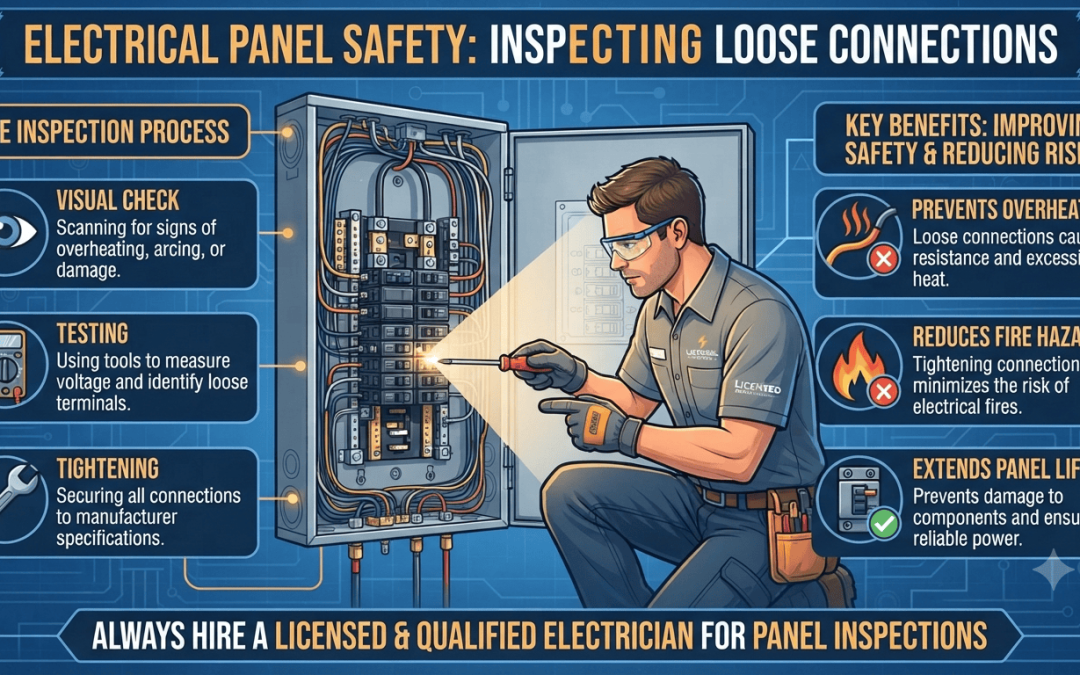
Electrical systems are designed to deliver power safely and efficiently throughout a property. However, even a small issue such as a loose electrical connection can create serious safety hazards if left unaddressed. Loose connections may seem like a minor problem, but they can lead to overheating, damaged electrical components, unexpected power failures, and even electrical fires.
Because loose electrical connections are often hidden behind walls, ceilings, switchboards, or electrical outlets, many property owners are unaware of the danger until noticeable problems begin to appear. Regular inspections and timely repairs by a licensed electrician can help identify these hidden hazards before they develop into costly or dangerous situations.
Whether you own a home, office, shop, or industrial facility, understanding the risks associated with loose electrical connections is essential for protecting both people and property.
What Are Loose Electrical Connections?
An electrical connection is the point where wires are securely joined to allow electricity to flow safely through a circuit.
A loose electrical connection occurs when these wires are no longer firmly attached due to factors such as:
- Natural wear and tear
- Poor installation
- Vibration
- Overloaded circuits
- Corrosion
- Aging electrical components
When electricity passes through a loose connection, resistance increases. This generates heat that can damage wires, outlets, switches, and electrical equipment over time.
Why Loose Connections Are Dangerous
Loose electrical connections create resistance within an electrical circuit.
Instead of electricity flowing smoothly, heat builds up around the connection point.
This excessive heat may result in:
- Melted wire insulation
- Damaged switches
- Burnt sockets
- Tripped circuit breakers
- Electrical arcing
- Fire hazards
If ignored, these problems can eventually lead to serious electrical accidents.
Common Causes of Loose Electrical Connections
Several factors may cause electrical connections to become loose over time.
Aging Electrical Systems
Older electrical systems naturally experience wear after years of daily use.
Metal components may expand and contract repeatedly due to changing temperatures, gradually loosening wire connections.
Poor Installation
Improper installation during renovations or electrical work may leave wires insufficiently secured.
This increases the likelihood of future electrical problems.
Frequent Vibrations
Buildings containing heavy machinery, industrial equipment, or large appliances often experience vibrations that may gradually loosen electrical terminals.
Overloaded Circuits
Circuits carrying excessive electrical loads generate more heat, placing additional stress on electrical connections.
Warning Signs of Loose Electrical Connections
Although loose connections are often hidden, they frequently produce warning signs.
Common symptoms include:
- Flickering lights
- Warm electrical outlets
- Burning smells
- Buzzing sounds
- Frequently tripping circuit breakers
- Sparking outlets
- Intermittent power supply
- Discoloured switches or sockets
These warning signs should never be ignored because they may indicate developing electrical hazards.
The Risk of Electrical Fires
One of the biggest dangers of loose electrical connections is the increased risk of fire.
When excessive heat builds up around wiring connections, nearby materials such as insulation, wood, or plastic may eventually ignite.
Electrical fires often begin inside walls or ceilings where they remain unnoticed until significant damage has already occurred.
Routine electrical inspections help detect these hidden dangers before they become emergencies.
Protecting Electrical Appliances
Loose electrical connections do not only affect wiring.
They can also damage connected appliances and equipment by causing unstable voltage or intermittent power supply.
Affected equipment may include:
- Air conditioners
- Refrigerators
- Washing machines
- Water heaters
- Computers
- Office equipment
- Manufacturing machinery
Protecting electrical connections helps extend the lifespan of valuable appliances and reduces repair costs.
Why Professional Electrical Inspections Matter
Many loose electrical connections cannot be detected through visual inspection alone.
Licensed electricians use professional testing equipment to identify hidden issues safely.
During an inspection, electricians may examine:
- Distribution boards
- Circuit breakers
- Electrical panels
- Power sockets
- Light switches
- Wiring connections
- Earthing systems
Early detection allows repairs to be completed before major problems develop.
Preventive Electrical Maintenance Improves Safety
Routine electrical maintenance helps reduce the likelihood of unexpected failures.
Preventive maintenance may include:
- Tightening electrical terminals
- Testing circuit breakers
- Inspecting wiring
- Replacing damaged outlets
- Checking electrical loads
- Identifying worn components
Scheduled maintenance improves system reliability while reducing long-term repair costs.
Why DIY Repairs Can Be Dangerous
Electrical systems should only be repaired by qualified professionals.
Attempting DIY electrical repairs may:
- Increase fire risks
- Cause electric shock
- Damage electrical equipment
- Void insurance coverage
- Violate local electrical regulations
Hiring a licensed electrician helps ensure repairs are completed safely and in accordance with electrical standards.
When Should You Contact an Electrician?
Property owners should arrange an inspection immediately if they notice:
- Burning odours
- Buzzing sounds
- Warm switches
- Flickering lights
- Repeated circuit breaker trips
- Sparking outlets
- Unexplained power interruptions
Prompt action helps prevent small electrical issues from becoming dangerous emergencies.
Benefits of Professional Electrical Maintenance
Regular electrical maintenance provides far more than peace of mind. It helps ensure that an electrical system continues operating safely, efficiently, and reliably while reducing the likelihood of unexpected breakdowns.
Long-term benefits include:
-
Improved electrical safety
-
Lower fire risks
-
Greater system reliability
-
Longer equipment lifespan
-
Reduced emergency repairs
-
Better energy efficiency
-
Lower maintenance costs
Instead of waiting for electrical faults to occur, preventive maintenance allows businesses and homeowners to address small issues before they become major safety hazards.
Electrical Maintenance Protects Businesses
Commercial and industrial facilities often rely on complex electrical systems to support daily operations.
A loose electrical connection in a switchboard, distribution panel, or production equipment can interrupt business activities and lead to costly downtime.
Regular inspections help businesses:
-
Minimise production interruptions
-
Protect valuable machinery
-
Improve workplace safety
-
Reduce unexpected repair costs
-
Maintain reliable electrical performance
For businesses that depend on continuous operations, preventive electrical maintenance is an important investment.
Protecting Homes and Families
Residential properties are equally vulnerable to loose electrical connections.
As electrical systems age, wiring and terminals may gradually loosen due to years of daily use.
Regular inspections help homeowners identify problems before they affect:
-
Family safety
-
Household appliances
-
Home office equipment
-
Home entertainment systems
-
Property value
Preventive maintenance helps ensure the home’s electrical system continues operating safely for many years.
Why Early Repairs Save Money
Many property owners postpone electrical repairs because the warning signs appear minor.
Unfortunately, small electrical faults rarely resolve themselves.
Ignoring loose electrical connections may eventually result in:
-
Extensive wiring repairs
-
Appliance replacement
-
Electrical panel damage
-
Fire damage restoration
-
Emergency electrical call-outs
Repairing a loose connection early is usually far more affordable than dealing with the consequences of a major electrical failure.
Choosing a Qualified Electrician
Not all electrical contractors provide the same level of experience and expertise.
When selecting an electrician, property owners should look for professionals who offer:
-
Licensed electrical services
-
Electrical inspections
-
Wiring repairs
-
Electrical troubleshooting
-
Preventive maintenance
-
Distribution board servicing
-
Emergency electrical support
An experienced electrician can accurately diagnose loose electrical connections and recommend the safest and most effective repair solution.
Long-Term Benefits of Addressing Loose Electrical Connections
Identifying and repairing loose electrical connections provides many long-term advantages.
Benefits include:
✔ Improved electrical safety
✔ Reduced fire risks
✔ Greater system reliability
✔ Longer appliance lifespan
✔ Fewer unexpected power failures
✔ Lower repair costs
✔ Improved energy efficiency
✔ Greater peace of mind
Routine inspections and preventive maintenance help ensure electrical systems continue operating safely while protecting both people and property from avoidable electrical hazards.
Conclusion
Loose electrical connections may seem like a minor issue, but they are one of the most common hidden causes of electrical faults and fire hazards. Because these problems often develop behind walls, inside switchboards, or within electrical panels, they can remain unnoticed until they begin causing overheating, flickering lights, damaged appliances, or unexpected power failures.
Recognising the warning signs and arranging a professional electrical inspection as early as possible can prevent small problems from becoming serious safety risks. Licensed electricians have the knowledge, experience, and specialised equipment needed to identify loose connections, carry out safe repairs, and ensure electrical systems continue operating efficiently.
Regular preventive electrical maintenance is one of the most effective ways to reduce the risk of electrical fires, extend the lifespan of electrical equipment, and improve the reliability of your property’s electrical system. Whether for a home, office, retail premises, or industrial facility, investing in professional electrical maintenance helps protect people, property, and valuable electrical assets.
By taking a proactive approach to electrical safety, property owners can minimise costly repairs, avoid unexpected disruptions, and enjoy greater confidence that their electrical systems are operating safely and reliably.
FAQs
1. What causes loose electrical connections?
Loose electrical connections can develop due to aging electrical systems, poor installation, vibration, overloaded circuits, corrosion, or normal wear and tear. Over time, these factors may cause wiring terminals to loosen, increasing electrical resistance and generating excessive heat.
2. How do I know if I have a loose electrical connection?
Common warning signs include flickering lights, buzzing sounds, burning smells, warm power outlets or switches, sparking sockets, intermittent power supply, and circuit breakers that trip repeatedly. These symptoms should be inspected by a licensed electrician as soon as possible.
3. Can loose electrical connections cause electrical fires?
Yes. Loose connections create resistance, which generates heat. If left unresolved, this heat can damage wire insulation and nearby electrical components, increasing the risk of electrical arcing and potentially starting a fire.
4. How often should electrical systems be inspected?
Inspection frequency depends on the age of the property, electrical usage, and the condition of the electrical system. Older buildings, commercial premises, and properties with recurring electrical issues should undergo regular professional inspections to identify developing faults before they become serious.
5. Why should I hire a licensed electrician instead of fixing it myself?
Electrical work requires specialised knowledge, proper testing equipment, and compliance with safety regulations. A licensed electrician can safely diagnose loose electrical connections, perform reliable repairs, and ensure the electrical system continues operating safely. DIY electrical repairs may increase the risk of electric shock, equipment damage, or fire.
© 2024 Electrician Wireman. All Rights Reserved. Web Design Malaysia | SEO Services | Mobile Apps