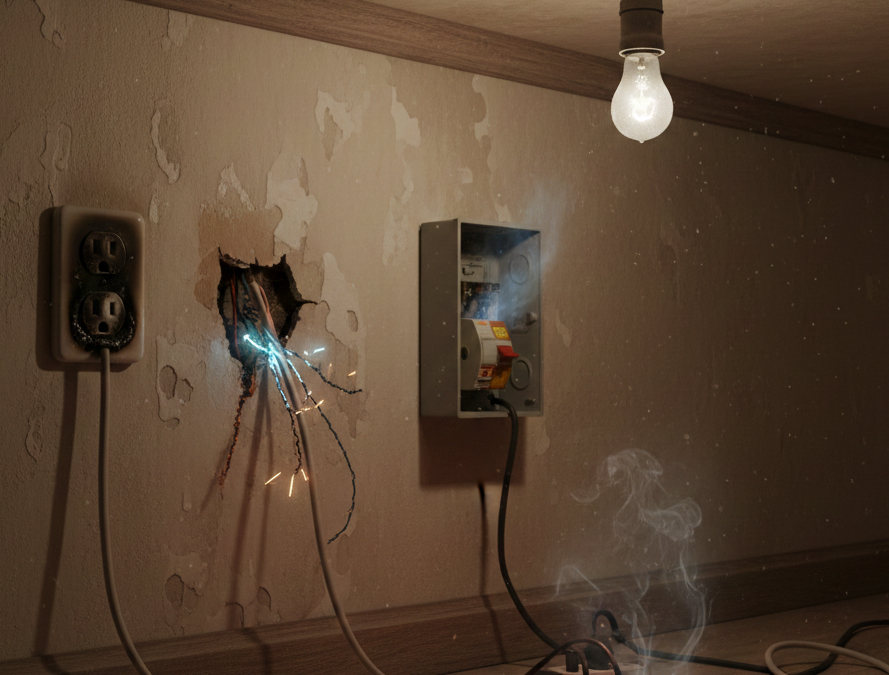
Bad house wiring is one of the most dangerous hidden problems in residential properties. While wiring issues often start small, they can quickly lead to electrical fires, power failures, appliance damage, and serious safety risks if left unchecked.
Understanding the early warning signs of faulty wiring helps homeowners act before minor issues turn into costly emergencies.
1. Frequent Circuit Breaker Trips and Blown Fuses
Short answer: Repeated breaker trips are one of the clearest signs your home’s wiring is under stress.
Circuit breakers are designed to shut off power when electrical demand exceeds safe limits. Occasional trips may happen, but frequent or unexplained trips indicate deeper wiring problems.
What this usually means:
-
Overloaded circuits
-
Aging or damaged wiring
-
Poorly distributed electrical loads
-
Faulty breaker connections
When wiring deteriorates, it struggles to carry electrical current safely. This forces breakers to trip as a protective response, preventing overheating or fire. Ignoring this warning puts your home at risk.
Many homeowners reset breakers repeatedly without realizing this only masks the real issue. Over time, constant tripping weakens breakers and increases the chance of overheating inside walls.
⚠️ Important: Repeated breaker trips should always be inspected by a licensed electrician, as they often signal wiring systems that no longer meet safety standards.
2. Flickering, Dimming, or Buzzing Lights
Short answer: Flickering or buzzing lights often indicate loose, damaged, or outdated wiring.
If lights flicker when appliances turn on or dim unexpectedly, your wiring may not be supplying consistent voltage. This problem is more than an annoyance — it’s a warning sign of unstable electrical flow.
Common causes include:
-
Loose wire connections
-
Corroded terminals
-
Overloaded circuits
-
Poor grounding
Buzzing sounds from switches or fixtures are especially concerning. They often indicate electrical arcing, which generates heat and can ignite nearby materials.
These symptoms suggest your wiring system is struggling to handle modern electrical demands, particularly in older homes.
A professional inspection ensures voltage levels are stable and connections are secured correctly, restoring safety and reliability.
3. Burning Smells or Scorch Marks Around Outlets
Short answer: Burning odors are a serious red flag that requires immediate attention.
Electrical wiring should never produce odors. A burning or plastic smell usually means insulation is overheating or melting inside walls or outlets.
Warning signs to watch for:
-
Scorch marks on outlets or switches
-
Warm or hot outlet plates
-
Discolored wall areas
-
Persistent burning smells
These signs often appear just before an electrical fire. Heat buildup inside wiring can ignite wood framing, drywall, or insulation.
If you notice any burning smell:
-
Turn off power immediately
-
Avoid using affected outlets
-
Contact a professional electrician right away
Delaying action significantly increases fire risk and potential property damage.
4. Outlets That Spark, Feel Loose, or Don’t Work Properly
Short answer: Sparking or loose outlets indicate unsafe wiring connections.
Occasional tiny sparks may occur when plugging devices in, but frequent or large sparks are not normal. Loose outlets can expose live wiring, increasing shock risk.
Causes often include:
-
Worn-out wiring
-
Loose terminal screws
-
Poor original installation
-
Aging outlet components
Loose outlets allow wires to move, creating friction and heat. Over time, this leads to insulation breakdown and arcing.
Professional outlet inspection and rewiring ensures:
-
Secure connections
-
Proper grounding
-
Safe power delivery
-
Code compliance
This upgrade protects both people and appliances from harm.
5. Warm Walls, Ceilings, or Switch Plates
Short answer: Heat behind walls often signals overloaded or failing wiring.
Electrical wiring should never heat surrounding surfaces. Warm walls or switch plates mean current is generating excessive heat due to resistance or faulty connections.
This usually points to:
-
Undersized wiring
-
Overloaded circuits
-
Damaged insulation
-
Poor grounding
Hidden heat buildup is extremely dangerous because it often occurs out of sight. Many electrical fires start this way.
A licensed electrician can detect overheating using professional tools and address problems before they escalate.
6. Outdated Wiring Types in Older Homes
Short answer: Old wiring systems are not designed for today’s electrical needs.
Homes built decades ago may still use:
-
Aluminum wiring
-
Knob-and-tube wiring
-
Cloth-insulated cables
These systems lack modern safety features and often fail under modern electrical loads.
Risks of outdated wiring:
-
Higher fire risk
-
Inadequate grounding
-
Insurance issues
-
Limited appliance support
Upgrading outdated wiring improves safety, efficiency, and property value while meeting current electrical codes.
7. Electrical Shocks When Touching Appliances
Short answer: Electrical shocks indicate grounding or wiring faults.
Even mild shocks suggest electricity is escaping its intended path. This can happen due to damaged wiring, poor grounding, or moisture exposure.
Electrical shocks are a serious safety hazard and should never be ignored.
Professional diagnosis ensures proper grounding and eliminates dangerous leakage.
❓Frequently Asked Questions (FAQs)
Q1: How dangerous is bad house wiring?
Very dangerous. Faulty wiring is a leading cause of residential electrical fires.
Q2: Can bad wiring increase electricity bills?
Yes. Inefficient wiring wastes energy and increases power consumption.
Q3: How often should house wiring be inspected?
Every 3–5 years, or immediately if warning signs appear.
Q4: Can I fix wiring issues myself?
Major wiring issues should always be handled by licensed electricians for safety and legal compliance.
Conclusion: Don’t Ignore the Warning Signs
Bad house wiring rarely fails without warning. Flickering lights, burning smells, frequent breaker trips, and warm outlets are all signals that your home’s electrical system needs professional attention.
Ignoring these signs puts your family, property, and finances at risk. If you notice any of these issues, contact Electrician Wireman today. Our licensed professionals can inspect, diagnose, and repair wiring problems safely — giving you peace of mind and a safer home.