
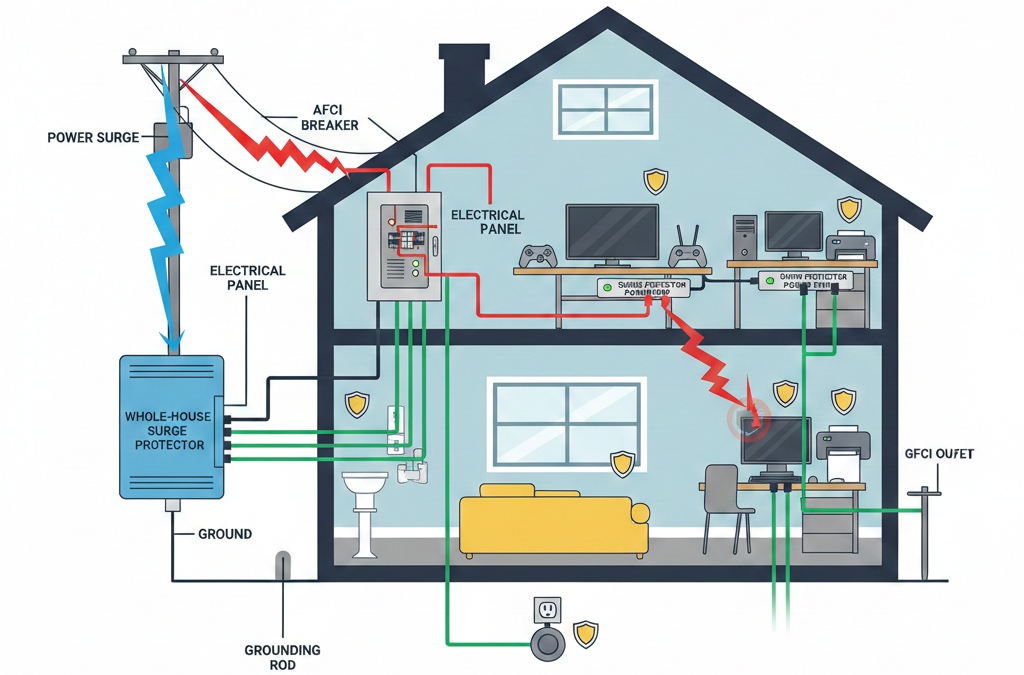
Frequent power surges can damage your home appliances, shorten the lifespan of electronics, and even pose a fire risk. Many homeowners are unaware that small, repeated surges can silently cause problems over time. Understanding what causes these surges and how to prevent them is essential for protecting your home and family.
In this guide, we’ll explain the main sources of frequent power surges and provide practical tips on prevention. By following these steps, you can safeguard your electrical system and ensure your devices remain safe and functional.
What Causes Frequent Power Surges?
Power surges occur when there’s a sudden increase in electrical voltage. Common causes include:
-
Lightning strikes: Direct strikes or nearby lightning can send high voltage through power lines.
-
Faulty wiring: Old or damaged wiring inside your home can lead to unstable voltage.
-
Large appliances: Devices like air conditioners or refrigerators can cause small surges when they switch on or off.
-
Utility grid issues: Problems from your electricity provider may lead to voltage spikes.
-
Power outages and restorations: When power returns, sudden voltage fluctuations occur.
By identifying the root causes, homeowners can better anticipate and prevent surges before they damage electronics or appliances.
How to Prevent Power Surges in Your Home
Preventing frequent power surges requires both proactive and reactive strategies:
1. Install Surge Protectors
Use whole-home surge protectors to guard against external voltage spikes and plug-in surge protectors for sensitive devices.
2. Regular Electrical Maintenance
Have a licensed electrician inspect your wiring periodically. Proper grounding, circuit breakers, and updated wiring reduce the risk of surges.
3. Unplug Devices During Storms
During lightning or storms, unplug computers, TVs, and appliances to prevent damage from sudden voltage spikes.
4. Upgrade Outdated Electrical Panels
Older panels may not handle modern electrical loads effectively. Upgrading ensures smoother power distribution and minimizes surges.
5. Check for Utility Issues
Contact your electricity provider if frequent surges seem external. They can inspect lines and mitigate issues before they reach your home.
Signs You May Be Experiencing Frequent Power Surges
Watch for these warning signs:
-
Flickering lights
-
Frequent tripped breakers
-
Electronics that fail prematurely
-
Burn marks on outlets or plugs
If these occur, it’s time to take immediate action and consult a licensed electrician.
FAQs
Q1: Can power surges start a fire?
Yes. Severe or repeated surges can damage wiring and increase fire risk.
Q2: Do all appliances need surge protection?
High-value electronics like computers, TVs, and home theater systems benefit most from protection.
Q3: How often should I check my wiring?
Every 3–5 years, or sooner if you notice flickering lights or tripped breakers.
Conclusion
Frequent power surges can silently damage your home’s electrical system and appliances if left unchecked. By understanding the common causes—such as lightning, faulty wiring, and appliance load spikes—and taking steps to prevent them, you can protect your home from frequent power surges and maintain electrical safety.
Installing surge protectors, performing regular electrical maintenance, and upgrading outdated panels are simple ways to reduce risks. Don’t wait for damage to happen. Consult a licensed electrician today to safeguard your home, protect your devices, and prevent the costly consequences of frequent power surges.