
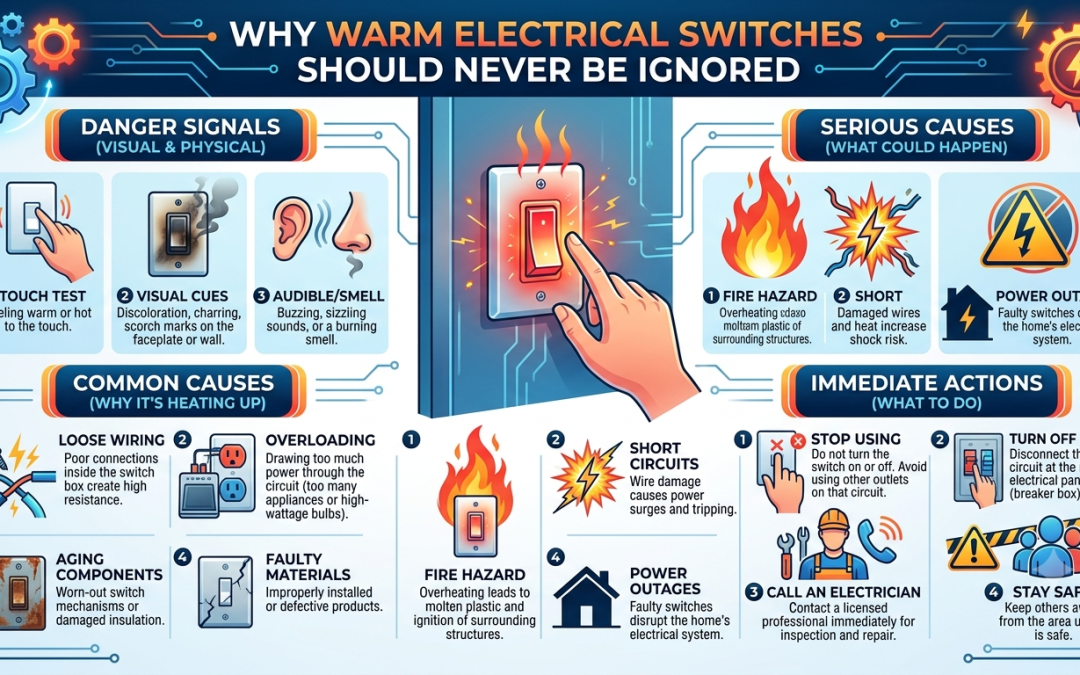
Electrical switches are among the most frequently used components in every home and commercial property. Most people expect them to operate safely without giving them much thought. However, if you notice that an electrical switch feels warm or hot to the touch, it should never be ignored.
While a switch may become slightly warm after prolonged use with high-powered lighting, excessive heat is often a warning sign that something within the electrical system requires attention. Ignoring this issue could increase the risk of electrical faults, equipment damage, or even electrical fires.
Understanding the possible causes of a warm electrical switch can help property owners recognize potential hazards early and take the appropriate steps to maintain a safe electrical system.
What Is a Warm Electrical Switch?
A warm electrical switch is one that feels noticeably warmer than normal during or after use.
Although certain dimmer switches or heavily loaded circuits may generate a small amount of heat during normal operation, a standard light switch should generally remain cool.
If the switch becomes hot enough to feel uncomfortable when touched or continues heating even when not heavily used, it may indicate an underlying electrical problem.
Why Electrical Switches Generate Heat
Electricity naturally produces a small amount of heat as it flows through electrical components.
Normally, this heat remains minimal because switches are designed to safely handle their rated electrical load.
However, when resistance increases or components begin to fail, excessive heat can develop inside the switch.
This heat may eventually become noticeable on the switch plate or surrounding wall.
Loose Electrical Connections
One of the most common causes of a warm electrical switch is a loose electrical connection.
Loose wiring creates additional electrical resistance, causing energy to be converted into heat.
Over time, loose connections may result in:
- overheating
- intermittent power problems
- damaged switch terminals
- increased fire risk
Because these problems often develop gradually, professional inspection is recommended whenever overheating is suspected.
Overloaded Electrical Circuits
Electrical switches are designed to operate within specific current limits.
When too many lights or electrical devices are connected to the same circuit, the switch may experience excessive electrical load.
Common situations include:
- multiple high-powered light fixtures
- oversized lighting systems
- additional electrical appliances added to existing circuits
Overloaded circuits place extra stress on electrical components and may contribute to overheating.
Worn or Aging Switches
Like any electrical component, switches wear out over time.
Years of daily use can gradually affect internal contacts and mechanical parts.
Signs of an aging switch include:
- warmth during operation
- loose switching action
- unusual noises
- inconsistent performance
Replacing worn switches helps maintain electrical safety and reliable operation.
Faulty Switch Components
Internal switch components may deteriorate because of:
- repeated use
- manufacturing defects
- electrical wear
- environmental conditions
Damaged internal contacts increase electrical resistance, generating additional heat whenever the switch is used.
A faulty switch should be replaced by a qualified electrician.
Incorrect Switch Installation
Improper installation can also contribute to overheating.
Examples include:
- loose terminal screws
- incorrect wire connections
- incompatible switch ratings
- poor workmanship
Professional installation helps ensure switches operate safely according to electrical standards.
High-Powered Lighting Systems
Certain lighting systems place greater demands on electrical switches.
Examples include:
- high-wattage lighting
- multiple lighting circuits
- commercial lighting installations
If the installed switch is not designed for the electrical load, overheating may occur.
Using properly rated switches helps reduce this risk.
Dimmer Switches Can Feel Slightly Warm
Not every warm switch indicates a fault.
Dimmer switches commonly generate a small amount of heat because they regulate electrical current.
However, they should never become excessively hot.
If a dimmer switch becomes unusually warm, professional evaluation is recommended.
Warning Signs That Should Never Be Ignored
A warm switch is often accompanied by additional warning signs such as:
- burning smells
- buzzing sounds
- flickering lights
- discoloured switch plates
- sparks
- intermittent operation
These symptoms may indicate a more serious electrical issue requiring immediate attention.
Potential Safety Risks
Ignoring an overheating switch may increase the likelihood of:
- electrical fires
- damaged wiring
- circuit failure
- equipment damage
- electric shock hazards
Prompt action helps reduce these risks and protects both occupants and property.
Why Professional Inspection Is Important
A qualified electrician can identify the root cause of overheating by inspecting:
- switch condition
- wiring connections
- electrical load
- circuit performance
- safety compliance
Professional diagnosis ensures the problem is resolved safely and effectively.
Preventing Electrical Switch Problems
Homeowners and business owners can reduce electrical issues by:
- scheduling regular electrical inspections
- replacing damaged switches promptly
- avoiding overloaded circuits
- upgrading aging electrical systems
- hiring licensed electricians for installations and repairs
Preventive maintenance supports long-term electrical safety.
Conclusion
A warm electrical switch should never be dismissed as a minor inconvenience. While some specialised switches may produce a small amount of heat during normal operation, excessive warmth often signals underlying electrical problems that require attention.
Loose wiring, overloaded circuits, aging components, and faulty installations are among the most common causes of overheating. Addressing these issues early helps prevent more serious electrical hazards while maintaining a safe and reliable electrical system.
If an electrical switch feels unusually warm or is accompanied by burning smells, flickering lights, or buzzing sounds, contacting a qualified electrician is the safest course of action.
More Info
https://electricianwireman.com/
https://electricianwireman.com/blog/
FAQs
1. Is it normal for an electrical switch to feel warm?
A standard switch should normally remain cool. Slight warmth may occur with some dimmer switches, but excessive heat should always be inspected.
2. Can a warm electrical switch be dangerous?
Yes. Overheating may indicate loose wiring, overloaded circuits, or faulty components that increase electrical safety risks.
3. What should I do if my light switch feels hot?
Avoid continued use if possible and arrange for a qualified electrician to inspect the switch and wiring.
4. Can overloaded circuits cause switches to overheat?
Yes. Excessive electrical load places additional stress on switches and may generate unwanted heat.
5. How can I prevent electrical switch overheating?
Regular electrical inspections, proper installations, and avoiding overloaded circuits help keep switches operating safely.
© 2024 Electrician Wireman. All Rights Reserved. Web Design Malaysia | SEO Services | Mobile Apps